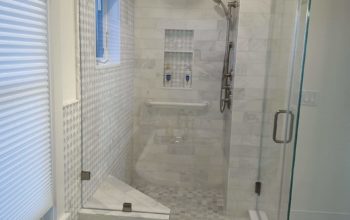
Imagine relaxing in a walk-in, open-concept shower designed with accessibility and style in mind. A barrier-free shower features a seamless, zero-threshold entry that blends with the floor, creating a spacious and modern bathroom look.
This type of curbless shower design enhances mobility and is perfect for aging-in-place renovations, families with young children, or individuals with disabilities. Its sleek, slip-resistant surface improves safety while maintaining a luxurious, spa-like feel.
Keep reading to discover what a barrier-free shower is, how it improves bathroom functionality, and why it’s a smart choice for accessible home design. You can also explore the 2025 shower remodel trends in Maryland for more inspiration.
What Is A Barrier-Free Shower?
A barrier-free shower, also known as a curbless shower or walk-in shower, is a type of accessible bathroom design where the shower floor is completely level with the rest of the bathroom. Unlike traditional shower pans with raised edges, the surface of a barrier-free shower gently slopes toward the drain, allowing water to flow smoothly without pooling.
This ADA-compliant shower design is ideal for aging-in-place renovations or for individuals with limited mobility. Because there are no steps or curbs, users can easily walk in or roll in with a wheelchair. Barrier-free showers help prevent slips and falls, making them a safe and practical solution for seniors, people with disabilities, or anyone looking to improve bathroom safety and accessibility.
Benefits of A Barrier-Free Shower
Purchasing a barrier-free shower offers multiple benefits that fit the lifestyle and requirements of elderly people.
Accessibility Features
Individuals who have limited flexibility or reach can use the shower controls independently because they are usually positioned in easily accessible areas, allowing for adjustments to the water flow and temperature.
In addition to being more accessible, barrier-free showers follow many of the standards of universal design, which guarantee that spaces and products are used by as numerous individuals as possible. For persons of all ages, sizes, and physical capabilities, a barrier free shower is the most accessible option because no curb or barrier is blocking the entrance to the shower.
Better Sanitation
It’s also simpler to clean barrier-free showers. Mold, mildew, and dirt have fewer places to hide when there are fewer surfaces, joints, and seams.
Easy Installation
It will take less time to install a barrier-free shower with a linear shower drain positioned against the wall since it only requires a one-sided slope.
Easy To Maintain
A barrier-free shower is easier to maintain since it has fewer areas where water and dirt can collect than an ordinary shower pan, which can be challenging to clean because of its difficult-to-clean areas and corners. The removal of physical barriers at the shower eliminates the compartmentalization that previously made the bathroom space feel smaller and more divided, and architects are finding that these barrier-free bathrooms make it possible to use materials that did not fit into the traditional shower-with-a-center-drain solution.
Larger is usually preferable in real estate, and barrier-free showers look larger. The barrier-free shower opens a smooth transition between the shower area and the remainder of the bathroom rather than dividing it into separate areas. Even though the bathroom’s overall square footage remains the same, this gives the entire space the impression of being larger.
Future-Ready
It is barrier free, meaning it uses available space efficiently and lacks any obtrusive stairs or barriers. For individuals with mobility issues, barrier free showers are the best option since they ensure easy entry and exit.
Greater-Appearing Spaces
Though it began as a more accessible shower area that made it easier for individuals to live in their houses, the barrier free shower trend has grown into a popular bathroom feature that enables these areas to have both an opulent and modern appearance.
Greater Comfort
The barrier-free, linear-drain, single-slope shower area is more pleasant and revitalizing than a center-drain setup for a few reasons. If there is a slowdown or even a little backup in the center drain, people are sometimes left standing on the drain or in a puddle of dirty water. A typical shower also has a floor that slopes in a 360-degree bowl form with the drain in the center, making it difficult to maneuver the uneven surface when taking a shower. The one-slope design makes walking much more level and efficiently drains water from the ground.
Greater Safety
There are no high edges or stairs to cause tripping hazards which lowers the possibility of injury from falling. This is especially crucial in moist areas where slips are likely to happen, like bathrooms. A barrier free shower’s level, smooth floor surface supports stability and safer mobility.
Types Of Barrier-Free Showers
There are various types of modernized barrier-free showers. The typical types of barrier-free showers are listed below:
Multi-Functional Showers
These ensure comfort and convenience for users of varying abilities by combining accessibility aspects with extra functionalities like grab bars, built-in chairs, adjustable shower heads, and thermostatic controls for diverse bathing necessities and tastes.
Open Showers
Open showers are made without any doors or enclosures, giving users a roomy and easily accessible shower area. They are easily accessible and maneuverable, especially for people who have difficulty with mobility.
Roll-In Showers
Because of their level of access, people in wheelchairs or other mobility assistance may glide straight into the shower.
Walk-In Showers
Stepping in and out of the shower is simple with walk-in showers since there is no threshold to cross or a low threshold. This reduces the need to climb over stairs or elevated edges.
Wheelchair-Accessible Showers
Wheelchair users can take advantage of the specially built showers. Users can enter the shower area and move about easily because of its wider entrances and more open spaces.
Frequently Asked Questions
1. What is a barrier-free shower?
A barrier-free shower is a walk-in bathroom design with no raised curb or step at the entry. The floor is slightly sloped to drain water efficiently, making it safer and easier to use for all ages.
2. How is a barrier-free shower different from a regular shower?
Unlike traditional showers with raised edges or tubs, a barrier-free design allows level entry from the bathroom floor. This creates easier access and reduces trip hazards while giving the space a more open look.
3. Who should consider installing a barrier-free shower?
A barrier-free shower is ideal for seniors, individuals with mobility challenges, and anyone planning for long-term home safety. It’s also a popular choice for homeowners who want a modern, spa-like bathroom upgrade.
Conclusion
Having an understanding of what is a barrier free shower can help in your decision-making. The goal of the barrier free shower is to give every user comfort in mind. For users, particularly seniors or anyone with different capabilities, it offers the best services possible for comfortable and safe showering.